

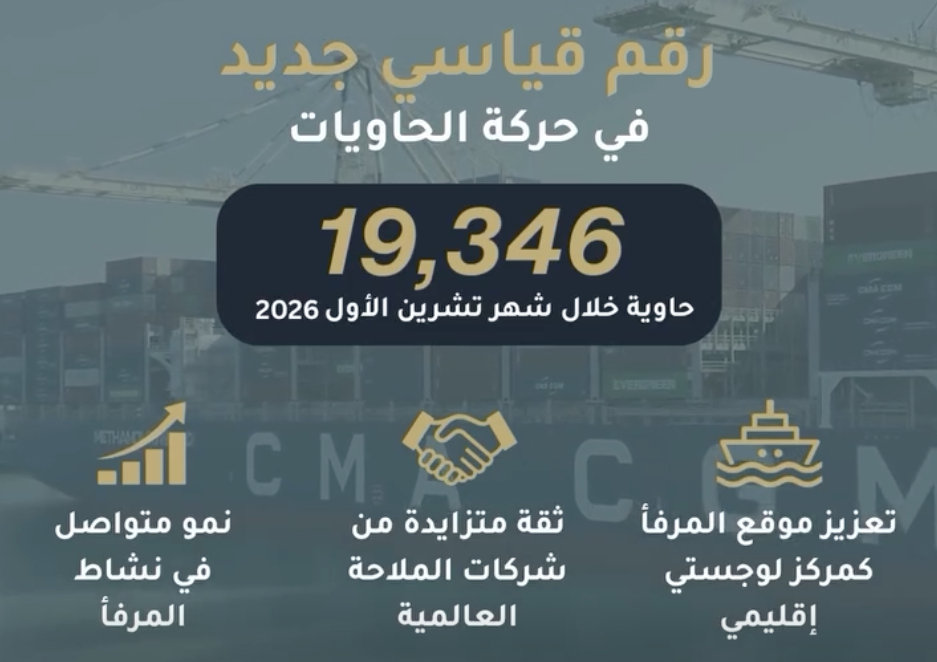
Port of Tripoli Sets a New Record in Container Traffic for October 2026!
In October 2026, the Port of Tripoli reached a new record of 19,346 containers—an achievement that reflects the sustained growth in its operations and the ongoing development of its operational and logistical capabilities.
This milestone underscores the growing confidence of international shipping lines, as well as the significance of the partnership with CMA CGM in boosting container traffic. It further cements the Port of Tripoli’s role in supporting the national economy and maritime trade across the Eastern Mediterranean.
Port of Tripoli: Lebanon’s Northern Gateway for Trade.
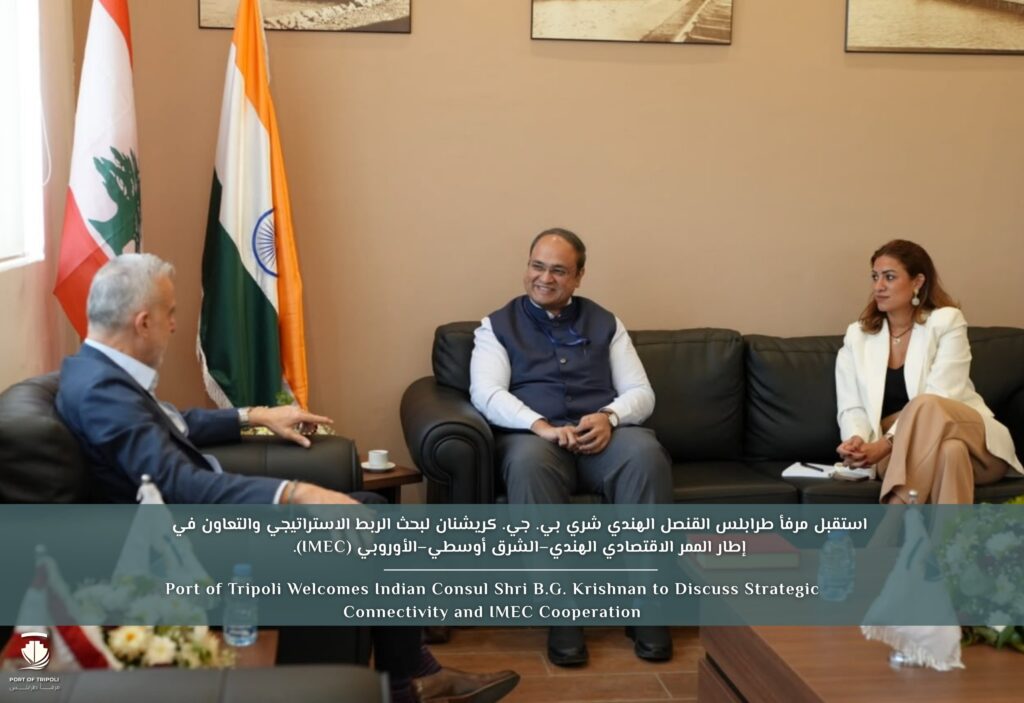
The Port of Tripoli welcomed Shri B.G. Krishnan, Consul for Economic, Trade, Commerce and Education at the Consulate General of India in Dubai, UAE, and Nodal Officer for Indian Customs for the Middle East and Africa, for a strategic discussion on regional connectivity, trade facilitation, and opportunities for cooperation under the India–Middle East–Europe Economic Corridor (IMEC).
During the visit, Chairman Eng. Iskandar Bandali presented the Port’s vision to transform Tripoli from a conventional cargo-handling port into a regional logistics hub, outlining its four strategic pillars: multimodal connectivity, integration with the Tripoli Special Economic Zone, governance and digital transformation, and infrastructure and capacity expansion.
The presentation highlighted the revival of the Tripoli–Syrian border railway project, the planned expansion of container and general cargo terminals, and ongoing efforts to develop a Port Community System (PCS) and modernize port operations.
Discussions placed particular emphasis on IMEC as both a physical and digital trade corridor, highlighting the importance of customs modernization, a National Single Window, interoperable digital systems, advance cargo information, and coordinated risk assessment to facilitate cross-border trade.
Shri Krishnan shared insights from India’s experience in customs digitalization and integration with the UAE, including the MAITRI initiative, and discussed potential avenues for technical cooperation, knowledge exchange, and specialized training for Lebanese customs officials.
The meeting reaffirmed the importance of institutional coordination between port authorities, customs administrations, and international partners to strengthen Lebanon’s integration into emerging regional and global trade corridors.
Positioning the Port of Tripoli within future trade corridors requires more than infrastructure investment. It requires connectivity, digital integration, and coordinated institutional reform.
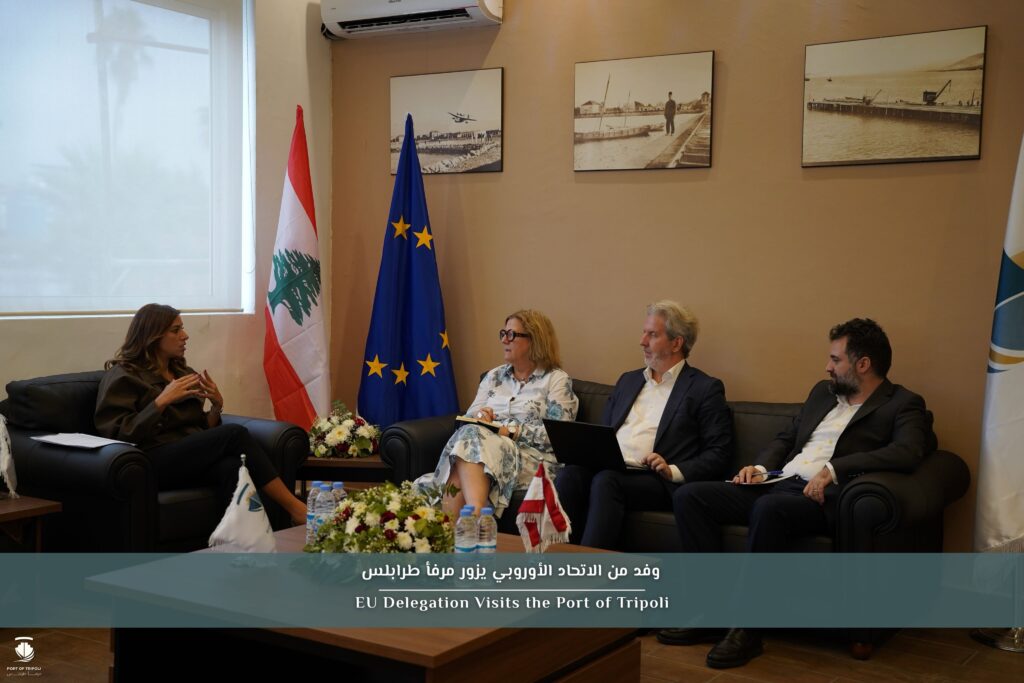
EU Delegation Visits the Port of Tripoli
The Port of Tripoli welcomed a delegation from the European Union Delegation to Lebanon, including Alessandra Viezzer, Head of Cooperation; Cyril Dewaleyne, Deputy Head of Cooperation and Team Leader for Economy, Green Deal and Local Development; Jimmy Albsoussi, Economist; and Vana Minassian, for a visit focused on strengthening cooperation, exploring investment opportunities, and advancing the Port’s strategic development priorities.
The visit began with a meeting with the Port’s Board of Directors, during which the delegation was introduced to the Port’s vision, master plan, ongoing projects, and short-, medium-, and long-term development priorities.
Discussions also addressed previously submitted proposals for EU funding, opportunities for future technical and financial cooperation, and ways to attract European companies to engage with the Port through investment, operations, technical expertise, and strategic partnerships.
The visit concluded with a field tour of the Port’s terminals, including the general cargo and container terminals, the cargo inspection scanner, and CMA CGM’s container terminal operations, offering the delegation a closer look at the Port’s infrastructure, operational capabilities, and growth potential.
Strengthening partnerships with the European Union is an important step toward positioning the Port of Tripoli as a competitive regional logistics and trade hub, connecting Lebanon to broader European and international markets. See less
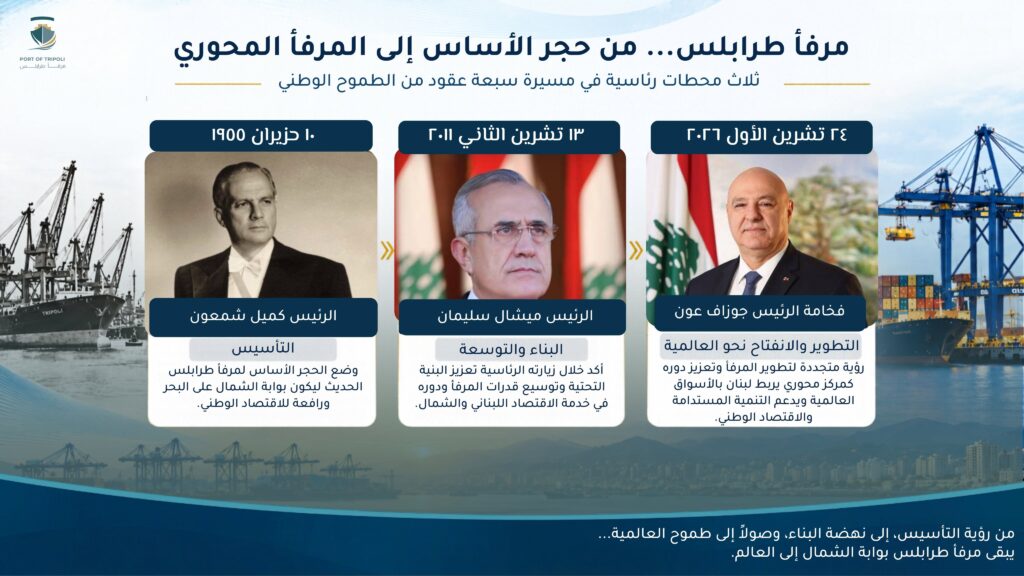
From the laying of the foundation stone in 1955, through various stages of expansion and development, to the visit by the President of the Republic—accompanied by General Joseph Aoun—in 2026:
These are the historic milestones that define the journey of the Port of Tripoli and its growing role in supporting the national economy and strengthening Lebanon’s commercial and logistical standing.
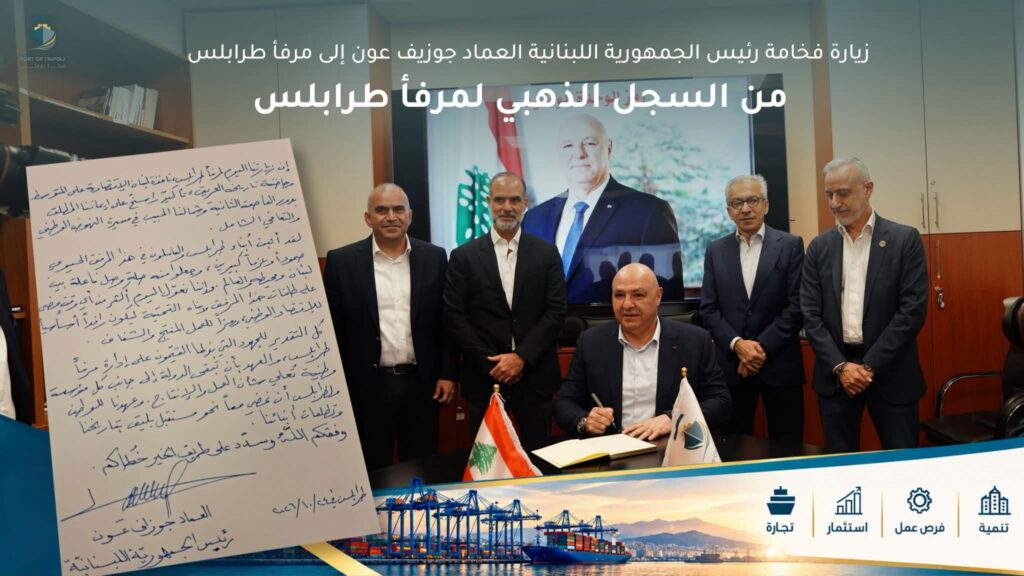
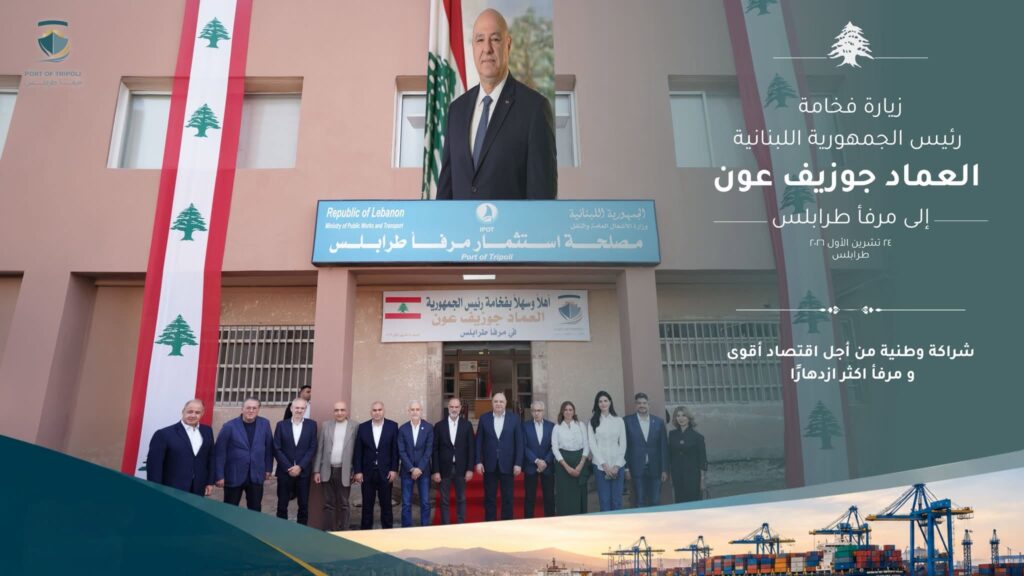
Lebanese President Joseph Aoun Visits the Port of Tripoli
His Excellency the President of the Lebanese Republic, General Joseph Aoun, visited the Port of Tripoli, accompanied by Ministers Fayez Rasamny (Public Works and Transport), Ahmad Al-Hajjar (Interior and Municipalities), Adel Nassar (Justice), and Amer Bisat (Economy and Trade), alongside senior government and security officials.
He was welcomed by Iskandar Bendali, Chairman of the Port of Tripoli Board of Directors; Dr. Ahmad Tamer, Director of the Port Authority; and Dr. Hassan Dannawi, Chairman of the Tripoli Special Economic Zone, alongside other officials. The meeting was attended by Vice Chairperson Sarah Al Charif, board members Nour Alameddine, Simon Abdel Massih, and Maryam Eid, and Lebanese Customs representatives.
Engineer Iskandar Bendali emphasized the need for presidential support to establish the National Single Window, strengthen Lebanese Customs, and integrate digital systems with the Port Community System (PCS) to enhance port competitiveness.
President Aoun stressed the importance of infrastructure development, institutional capacity, governance, and digital transformation to support integration into the India–Middle East–Europe Economic Corridor (IMEC). Discussions also covered the participation of the Ports of Tripoli and Beirut in the IMEC Ports Club and the importance of digital and customs integration to facilitate trade.
The visit included the control and monitoring room, where Brigadier Haroun briefed the delegation on security systems, followed by the container terminal and scanner facilities, where Joseph Dakkak, Chairman of CMA CGM Lebanon, provided a technical briefing. At the company’s premises, Dr. Hassan Dannawi presented investment and cooperation opportunities with the Special Economic Zone to stimulate economic activity and job creation.
In the port’s Golden Book, President Aoun praised its strategic role in connecting Lebanon to regional and international markets, supporting economic recovery, and advancing investment, trade, and development in Tripoli, northern Lebanon, and across Lebanon. See less
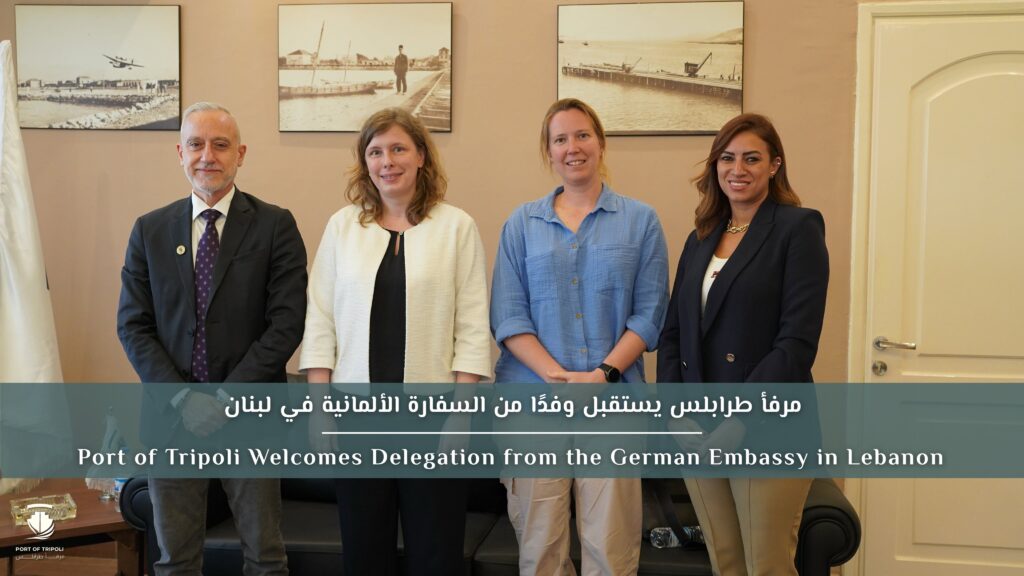
The Port of Tripoli welcomed Ms. Yasmin Raya, Deputy Head of Mission at the German Embassy in Lebanon, and Ms. Caroline Tiurat, Director of the Cultural and Economic Section, for a visit focused on exploring opportunities for cooperation and strengthening engagement with the German private sector.
The meeting provided an opportunity to present the Port’s strategic vision, development priorities, and key initiatives across the short, medium, and long term, highlighting its potential as a strategic maritime and logistics gateway and a driver of economic development for Tripoli and Lebanon.
Discussions focused on potential avenues for attracting German business interest and fostering partnerships, ranging from technical cooperation, knowledge exchange, and capacity building to private sector engagement, investment, and operational opportunities.
Particular emphasis was placed on establishing channels of communication with German companies and relevant institutions, ensuring greater visibility of the Port’s ongoing developments, upcoming projects, investment opportunities, and future tenders.
The visit concluded with a field tour of the Passenger Terminal, General Cargo Terminal, and Container Terminal, offering the delegation a closer look at the Port’s existing infrastructure, operational capabilities, and development potential.
The Port of Tripoli looks forward to building on this constructive exchange and exploring opportunities for future Lebanese-German cooperation in the maritime, logistics, and infrastructure sectors.
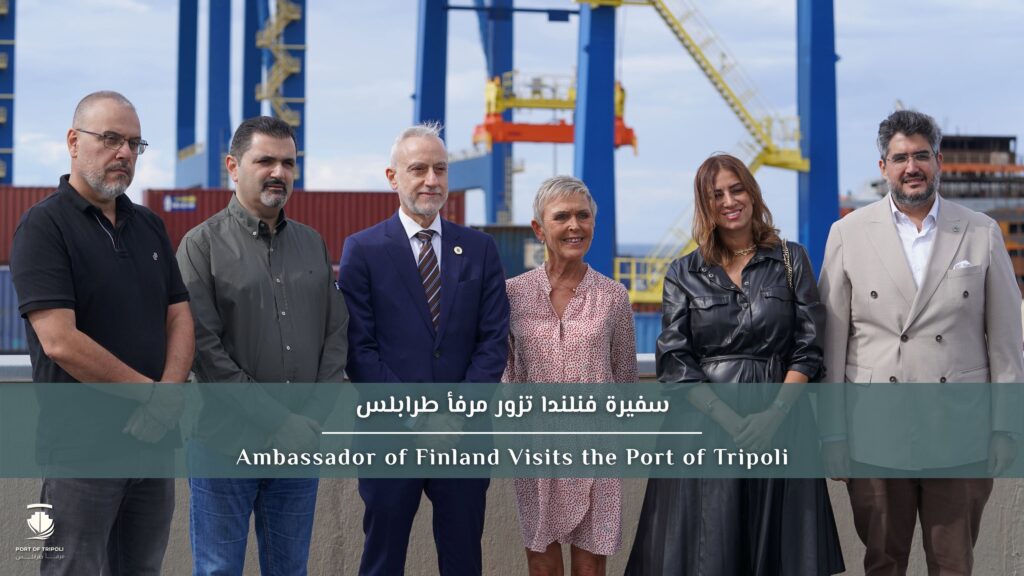
It was a pleasure welcoming H.E. Anne Meskanen, Ambassador of Finland to Lebanon, to the Port of Tripoli, as part of a day exploring the city’s development initiatives, untapped potential, and the renewed leadership driving its transformation.
At the Port, we shared our strategic vision, ongoing development projects, and ambitions to strengthen Tripoli’s position as a regional trade and logistics hub.
The visit included a tour of the CMA CGM-operated container terminal and its expansion potential, as well as the container scanning system and its role in enhancing security and facilitating trade.
Beyond its challenges, Tripoli is a city of immense potential, committed people, and renewed momentum worth discovering and investing in.
Thank you, Ambassador Meskanen, for your genuine interest, thoughtful questions, and engaging discussions that reflected a real curiosity to understand Tripoli’s potential and the opportunities ahead!
The United States Ambassador to Lebanon, Michel Issa, visited the Port of Tripoli, where he was welcomed by the Chairman of the Board, Engineer Iskandar Bendaly; Vice-Chairwoman Sarah El-Sharif; Board members Engineer Nour Alam El-Din and Maryam Eid; and the Port Director, Dr. Ahmed Tamer.
The visit began with a meeting at the port’s administration building, during which the facility’s operational and logistical capabilities, development projects, key components of the master plan, and the future vision for enhancing the port’s role in trade and maritime transport were presented. The meeting was followed by a field tour of the container terminal—attended by representatives from CMA CGM, Charles Assaf, Joseph Touk, and Rami Mortada—during which the Ambassador observed the terminal’s operational processes and capabilities. He also inspected the container X-ray scanning system, which plays a vital role in strengthening oversight efficiency and facilitating the movement of goods. In his remarks, Chairman Iskandar Bendaly welcomed the Ambassador, highlighting the strategic assets that position the Port of Tripoli to become a pivotal regional logistics hub in the Eastern Mediterranean. He outlined key projects and investment opportunities, most notably the expansion and modernization of the existing container terminal, the construction of a new container terminal, the enhancement of rail connectivity, digital transformation, and the significance of the port’s accession to the “IMEC Ports Club” (associated with the India-Middle East-Europe Economic Corridor). Furthermore, he emphasized the importance of collaborating with American companies and attracting investments to further develop the port and bolster its competitiveness. For his part, Ambassador Michel Issa expressed his pleasure with the visit, commending the enthusiasm and commitment of the Board of Directors and the staff, as well as the development projects and plans that were presented. He emphasized that the ports of Tripoli and Beirut possess significant potential for development, and expressed his optimism regarding the future of the Port of Tripoli and the promising opportunities to enhance its economic and logistical role in the region. The visit concluded by underscoring the importance of developing infrastructure and logistics services, and fostering investment and international partnerships—all of which serve to support the Lebanese economy and solidify the position of the Port of Tripoli within regional and international trade.Port of Tripoli Participates in the Launch of the IMEC Ports Club in New Delhi
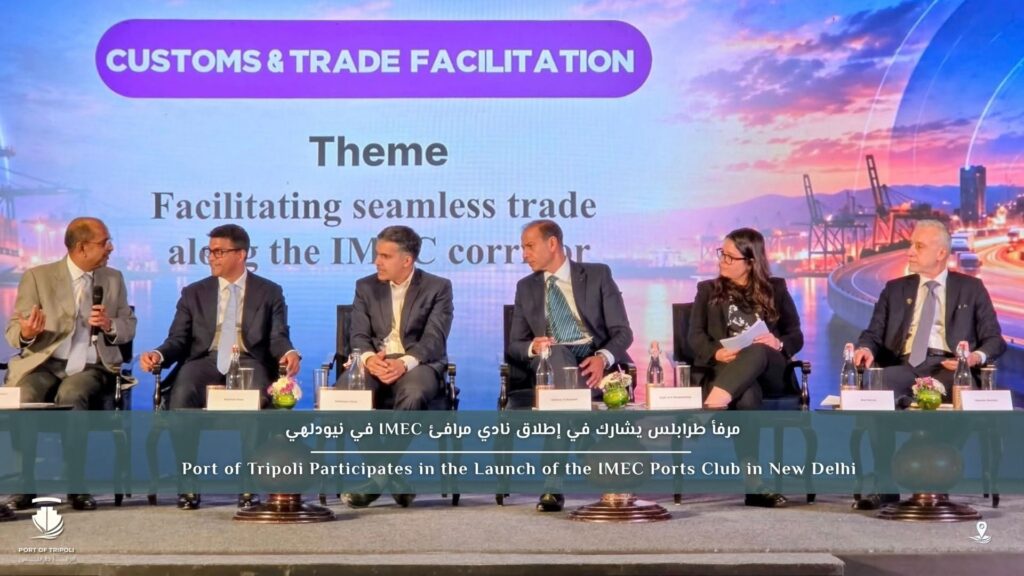
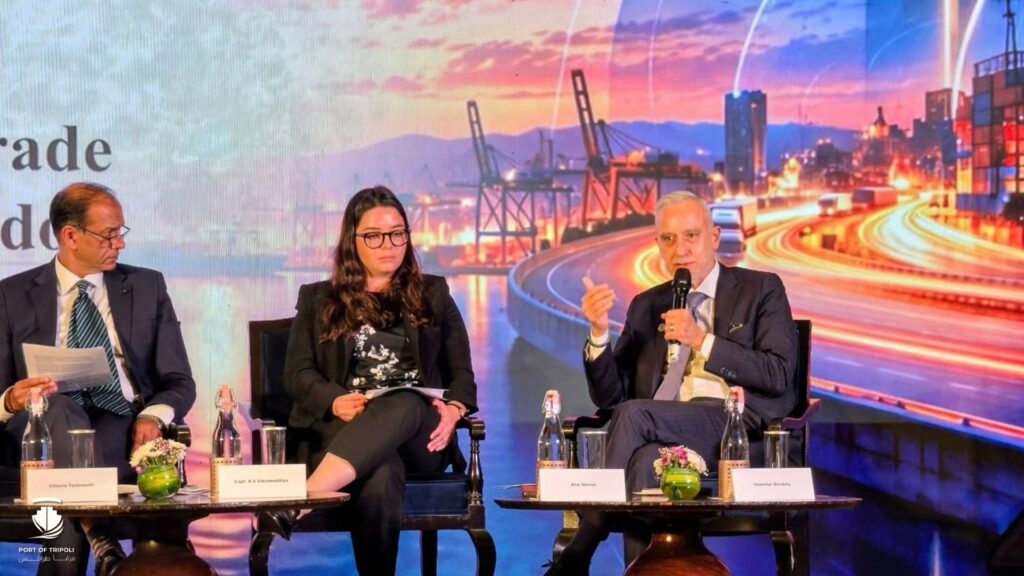
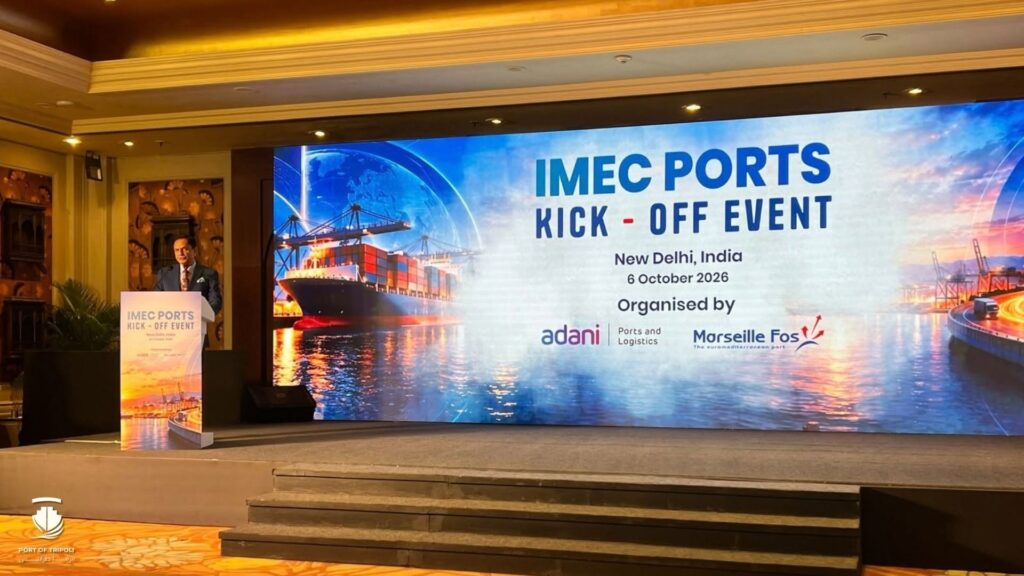
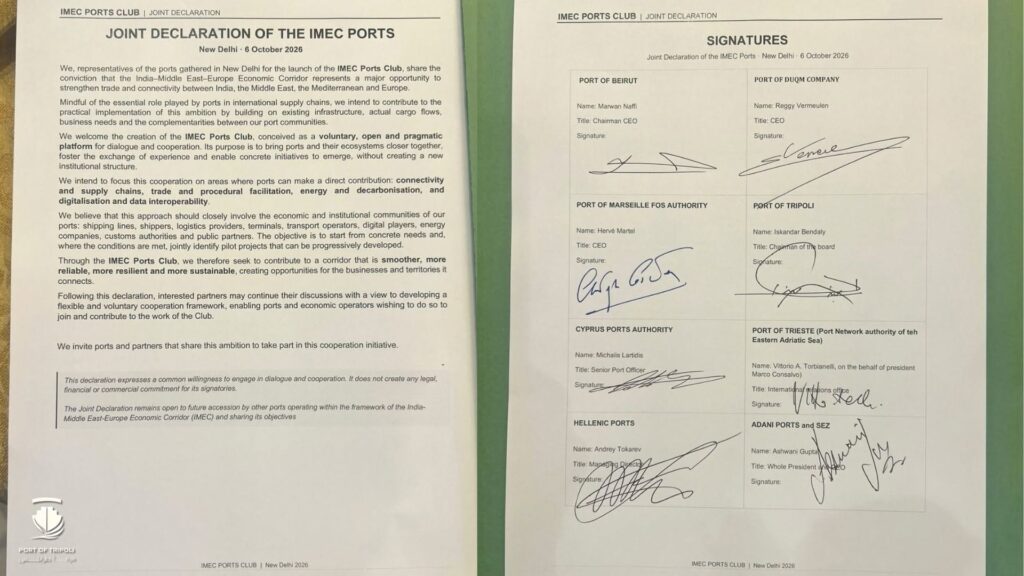
The Port of Tripoli, represented by the Chairman of its Board of Directors, Engineer Iskandar Bendaly, participated in a meeting held in New Delhi, India, on October 6, 2026, for the launch of the “IMEC Ports Club.” During the event, a joint declaration was signed to establish a voluntary, open framework for cooperation and coordination among the participating ports.
In addition to the Port of Tripoli (Lebanon), the declaration was signed by the Port of Beirut (Lebanon), the Port of Duqm (Sultanate of Oman), the Port of Marseille-Fos (France), the Cyprus Ports Authority (Republic of Cyprus), the Eastern Adriatic Sea Ports Network Authority (Port of Trieste, Italy), Hellenic Ports (Greece), and Adani Ports & SEZ (India).
The IMEC Ports Club aims to foster dialogue and cooperation among ports, facilitate the exchange of expertise, explore joint opportunities in areas such as connectivity and supply chains, streamline trade and procedures, address energy and emissions reduction, and advance digital transformation and data sharing—all with the goal of enhancing the efficiency, resilience, and sustainability of transport and trade operations.
The Port of Tripoli’s participation in this initiative reflects its commitment to strengthening its position on the regional and international transport and trade map, expanding its network of global port partnerships, and exploring opportunities that serve the interests of the Port of Tripoli, the Lebanese economy, and the nation as a whole.
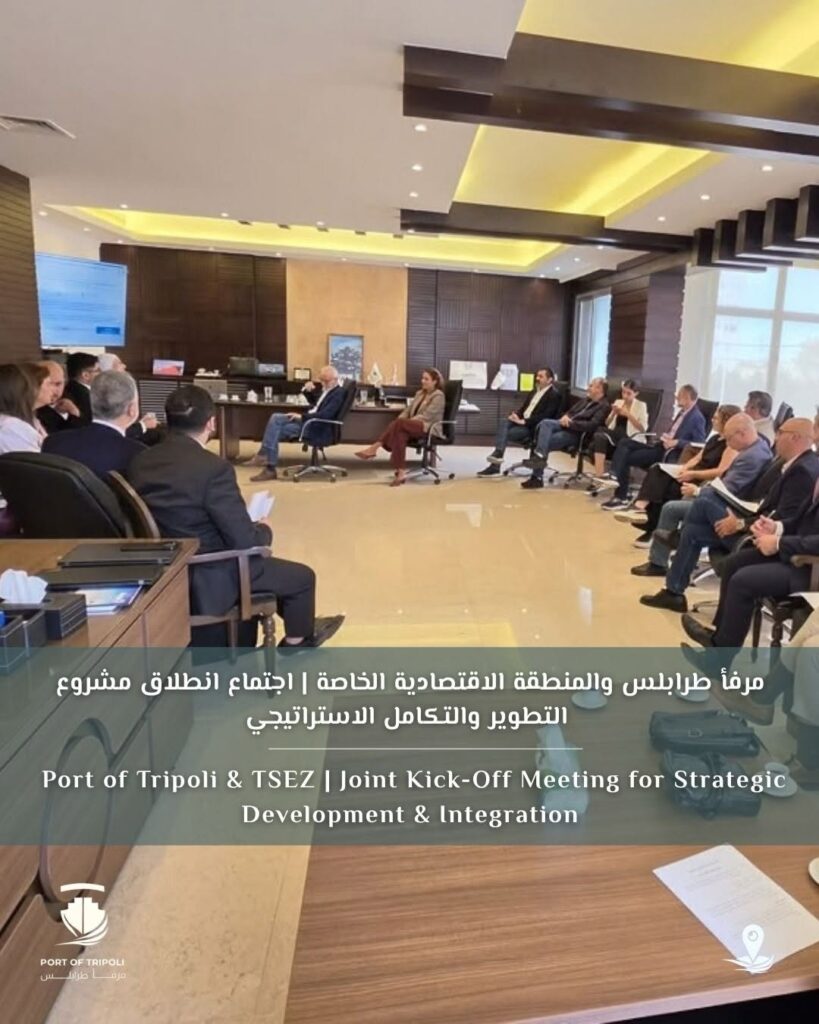
The Port of Tripoli hosted a joint kick-off meeting with the Tripoli Special Economic Zone (TSEZ), Mindsets and its consortium partners, marking the launch of a strategic consultancy assignment supporting the development of an integrated economic and logistics ecosystem in Tripoli.
For the Port of Tripoli, the assignment will focus on reviewing and developing the **Port’s fee and revenue model**, benchmarking it against regional and international practices while aligning it with the Port’s future vision, planned capacity expansion, Free Zone development, railway and regional connectivity, and the broader multimodal logistics ecosystem.
In parallel, the assignment will support TSEZ in developing its **licensing, regulatory and governance frameworks and One-Stop-Shop model**, with a focus on facilitating investment and improving ease of doing business.
The meeting emphasized close coordination between the Port and TSEZ to ensure complementarity between both entities and contribute to positioning Tripoli as an increasingly competitive regional economic and logistics hub.
Port of Tripoli Board Visits Minister of Public Works to Present Development Projects and Logistics Vision
The Port of Tripoli Board of Directors, headed by Chairman Iskandar Bendali, visited Minister of Public Works and Transport Fayez Rasamny to present the Port’s current development projects and achievements, as well as the progress of ongoing tenders, particularly the expansion of the container terminal, aimed at strengthening the Port’s capacity and role in transport and trade.
The meeting also addressed cooperation and integration with the Tripoli.
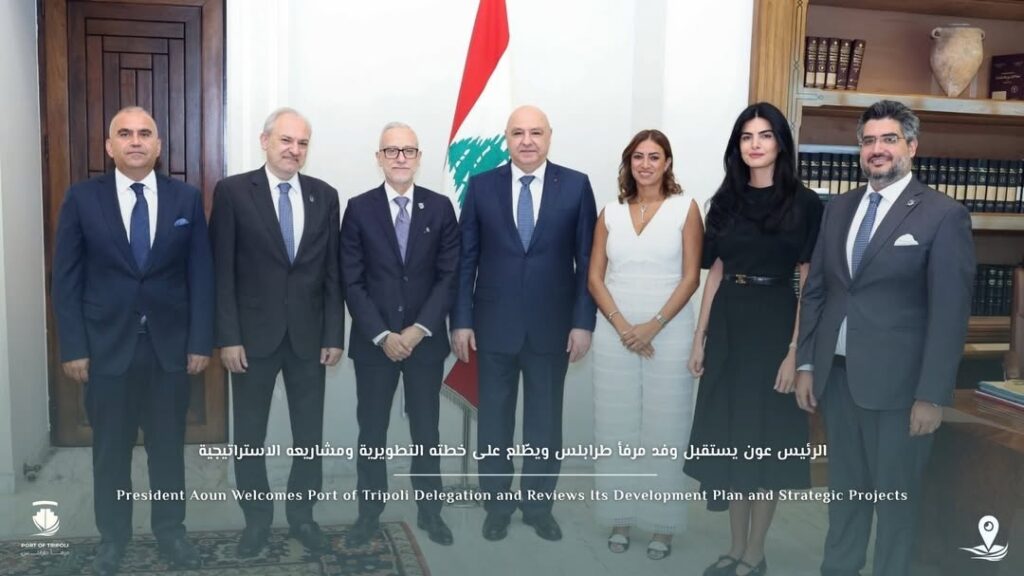
President Aoun Welcomes the Board of Directors of the Port of Tripoli and Reviews Its Development Plan and Strategic Projects
President of the Republic General Joseph Aoun welcomed (on Sept. 23, 2026) the Board of Directors of the Port of Tripoli, headed by Chairman Iskandar Bendali, to review the key progress achieved under the Port’s action plan over the past 11 months, as well as ongoing projects and future initiatives aimed at strengthening its economic and logistical role.
The meeting addressed the Port’s strategy for governance, administrative modernization, digital transformation, and logistics development, alongside projects to expand the container terminal, enhance storage and customs inspection facilities, and increase the Port’s overall capacity.
President Aoun commended the progress achieved and emphasized the importance of teamwork, transparency, good governance, and leveraging technological advancements to further develop the Port and strengthen its role in supporting the national economy.
Today September 15, 2026, at the Grand Serail, the Port of Tripoli, together with the Tripoli Special Economic Zone and the Railway and Public Transport Authority, marked a new milestone in Tripoli’s development journey under the patronage and in the presence of Prime Minister Dr. Nawaf Salam.
Building Climate Resilience: Port of Tripoli’s Ongoing Role in the EU SAFARI Project
The Port of Tripoli continues its active engagement in the SAFARI Project (Horizon Europe), an initiative dedicated to developing a generic digital platform for resilient port infrastructure. As the project progresses, our port plays a vital strategic role in ensuring that new technologies can withstand the challenges of extreme weather events and climate change.Our Role as a Replication Port
Within the consortium of 26 partners, the Port of Tripoli serves as a replication port, alongside the Port of Livorno (Italy). While the project’s pilot ports (Dunkirk, Seville, and Lisbon) initiate the testing of new digital tools, our mandate is to replicate these solutions in our port, advancing resilience and sustainability. By integrating SAFARI’s technologies and management modules into our specific infrastructure, we are actively working toward the scalability and robustness of these innovations. This process ensures that the tools developed are effective in Europe and adaptable to diverse maritime environments in the Mediterranean and beyond.International Collaboration and Knowledge Exchange
A core component of the SAFARI project is the continuous exchange of expertise between engineering, scientific, and operational partners. To support this, the Port of Tripoli delegation has been actively traveling to key project summits to align with our partners on technical milestones and deployment strategies. From the project kick-off in Lille (University of Lille) to strategic steering committees and technical workshops in Seville (Port of Seville), Livorno (Port of Livorno), and Brussels, we have been on the ground contributing to the future of climate-resilient maritime logistics.Looking Ahead
As the SAFARI project moves forward, the Port of Tripoli remains committed to adopting cutting-edge technologies that enhance safety, efficiency, and sustainability. Our participation in this project not only modernizes our own capabilities but also places Lebanon on the map as a proactive contributor to the future of global maritime logistics. This project is funded by the European Union’s Horizon Europe
SAFARI websiteTripoli Port Administration, in response to allegations of companies failing to pay due fees: We are committed to protecting public money and promoting the principles of transparency and integrity.
The Tripoli Port Administration issued a statement on Tuesday, December 16, 2025, which said: “In addition to what was circulated in some media about allegations that a number of companies and maritime agencies failed to pay the fees due at the Tripoli Port, and the accompanying suggestions that there were investigations against employees at the port against the backdrop of these allegations, the Tripoli Port Administration is interested in clarifying to public opinion the following:
– The port administration confirms that the process of collecting port fees is carried out in accordance with the approved legal procedures, and is subject to the direct supervision of the competent departments, within clear financial and procedural mechanisms that ensure transparency and proper application of applicable laws.
– The General Directorate of State Security plays a supportive and supporting role for the port administration, especially with regard to following up on parties that are late in paying due fees, within the framework of normal cooperation between official departments and institutions, and with the aim of protecting public money and enhancing compliance with applicable laws and regulations.
This institutional cooperation contributed directly to raising the fee collection rate to approximately 99%, which reflects the effectiveness of the procedures followed and the seriousness of follow-up, and refutes any impression or claim of laxity or systematic defect in this framework.
The Tripoli Port Administration stresses that there is no truth to what is being circulated about the existence of investigations against employees at the port on the grounds of facilitating non-payment of fees, as stated in some media reports, stressing that any measures taken by the competent authorities fall exclusively within the framework of normal supervisory work and institutional cooperation between official departments.
The Tripoli Port Administration calls on the media to be accurate and responsible in reporting news, and to be sure to refer to the relevant official sources before publishing any information that may lead to confusion or unjustified abuse of public institutions and employees who perform their duties in accordance with the law.
The statement concluded: “The Tripoli Port Administration affirms its full commitment to protecting public funds, promoting the principles of transparency and integrity, and continuing to cooperate with the various competent regulatory and security agencies, in a way that ensures the proper functioning of the port and the continuity of its activity in accordance with the highest administrative and legal standards.”
The first phase of the work to deepen and clean the fishermen’s port in Al-Abdeh has been completed (photos)
Significant progress has been observed in recent days in the dredging and cleaning of the fishermen’s port in Al-Abdeh. Work has been completed on the entrance and surrounding areas of the basin, allowing fishermen to enter and exit without any obstacles. The dredging of the entrance and its perimeter is now fully complete. It is worth noting that the second phase of cleaning and dredging the basin has begun from within.
It is noted that the project, which is being implemented with a donation from the Port of Tripoli to the Ministry of Public Works and Transport, came to fruition after numerous reviews and intensive efforts by the Mayor of Bebnine-Al-Abdeh, Mahmoud Jawhar, the Mukhtars of Bebnine, the “Aman” Association, and the Fishermen’s Cooperative in Al-Abdeh.


Minister Rassamni Holds Meeting with the Board of Directors of the Port of Tripoli: Strategic Vision for the Next Five Years
On November 13, 2025, Minister of Public Works and Transport Fayez Rassamni held a meeting in his office with the Chairman of the Board of Directors of the Port of Tripoli, Iskandar Bandali, and the new members, in the presence of the Port Director, Dr. Ahmad Tamer. During the meeting, the Board’s work program for the upcoming period was presented, and ways to develop the port in accordance with the Ministry’s general plan and in a manner that enhances integration among Lebanese ports were discussed.
Minister Rassamni emphasized the need to “develop a strategic vision for the next five years and prepare a practical action plan to achieve sustainable development for the port and strengthen its role as a key economic and commercial hub, while ensuring the application of modern management methods based on transparency, good governance, and leveraging digital technologies and artificial intelligence to enhance performance and efficiency.”

Tripoli Port Authority responded to Choucair: Serious allegations that require proof.
The Tripoli Port Investment Authority responded in a statement to “the statements made by former Minister and Head of Economic Bodies, Mohammad Choucair, in which he spoke of smuggling and suspicious activities within the port premises after 6:00 PM.”
The Authority considered that “these serious allegations require the provision of conclusive evidence, as they contain accusations that harm the reputation of the port and the security and customs agencies operating there.” It emphasized that “the Port of Tripoli is managed by highly competent and ethical security agencies, and is equipped with surveillance cameras covering all its areas, enabling the competent authorities to monitor everything that takes place within it 24/7.”
The Authority indicated that “in the interest of transparency and revealing the truth to the Lebanese, Arab, and international public opinion, the Port Authority hopes that His Excellency Minister Choucair, given his symbolic and responsible economic position, will provide any information or evidence he has to the relevant security and judicial agencies to investigate his claims, to avoid any misleading of public opinion.”
As part of his visit to Tripoli, Minister of Interior and Municipalities Ahmed Hajjar visited the Port of Tripoli, where he met with Port Director Dr. Ahmed Tamer.
The meeting discussed the port’s conditions and its vital role in stimulating economic activity in the north, as well as ways to support it, develop its facilities, and enhance its logistical capabilities.
During the visit, Minister Hajjar emphasized the importance of the Port of Tripoli as a key facility serving not only the city but also all Lebanese regions. He emphasized the need for cooperation between the relevant ministries and departments to secure the necessary support and enable the port to fulfill its vital role in developing the national economy.


Luxembourg Recognizes Lebanese Maritime Qualification Certificates: A New Achievement Boosting International Confidence in the Maritime Sector
The General Directorate of Land and Maritime Transport at the Ministry of Public Works and Transport announced in a statement that “Luxembourg has recognized the Lebanese Maritime Qualification Certificates (Certificate of Competency), based on Rule I/10 of the International Convention on Standards of Training, Certification and Watchkeeping for Seafarers (STCW Convention).” The statement emphasized that “this recognition is the result of constructive cooperation and ongoing coordination between the maritime authorities in Lebanon and Luxembourg, and at the same time reflects the growing international confidence in the Lebanese maritime system and in the advanced level of maritime training and education adopted by specialized Lebanese institutions.”
She noted that “this achievement embodies Lebanon’s commitment to implementing the standards issued by the International Maritime Organization (IMO) in the areas of training, certification, and watchkeeping, thus strengthening its position as a responsible maritime nation committed to international standards of safety and professional competence.” She explained that “this recognition will open new horizons for Lebanese seafarers, officers, and marine engineers who hold national qualification certificates, providing them with broader employment opportunities onboard vessels registered in Luxembourg, within a maritime environment that complies with the highest international standards of competence and maritime safety.”
On this occasion, the Director General of Land and Maritime Transport, Dr. Ahmed Tamer, affirmed that “this achievement represents a fundamental milestone in the development of national maritime capabilities and comes within the framework of the Directorate’s ongoing efforts to enhance international cooperation and modernize the Lebanese maritime system in line with the agreements and standards issued by the International Maritime Organization.”
He said, “This recognition is the culmination of a long process of professional and technical work undertaken by the Directorate, in cooperation with its local and international partners, to consolidate the credibility of the Lebanese Maritime Certificate.” He noted that “what has been achieved today confirms Lebanon’s position as a maritime nation that respects its international obligations and provides qualified Lebanese cadres with broader opportunities to engage in the global maritime labor market. We consider this a qualitative step towards strengthening Lebanon’s presence on the international maritime transport map.”
The Directorate indicated that “this development represents a strategic step for Lebanon towards broader European recognition of Lebanese maritime qualification certificates. It is expected to pave the way for Lebanon’s inclusion on the list of countries whose maritime qualifications are recognized by the European Union, thus enhancing employment opportunities for Lebanese officers and sailors in European fleets. This step embodies the future vision for maritime transport and capacity building set by Minister of Public Works and Transport Fayez Rasamny upon assuming his duties, which aims to modernize the Lebanese maritime system and raise the efficiency of national cadres, thus supporting Lebanon’s competitiveness in the global maritime labor market.”
She expressed her “high appreciation to the Luxembourg maritime authorities for their positive and fruitful cooperation,” stressing her “aspiration for further partnerships and international recognition that will enhance Lebanon’s maritime standing and consolidate its role as an active player in the global maritime transport industry.”
The arrival of the container ship M/V Buxlink at the container terminal at Tripoli Port, coming from Mersin Port in Turkey, to unload 1,095 TEUs for the local market, confirming the continued confidence of traders and importers in Tripoli Port and its services.

Statement issued by the Tripoli Port Investment Authority
The Tripoli Port Investment Authority has been receiving complaints via social media about obstacles to the exit of goods and containers from the port of Tripoli.
While it is important for the port administration and the security and customs agencies to uncover the truth and set the record straight, the port administration confirms that the process of removing goods arriving at the port after September 10, 2025, is proceeding normally and smoothly, in accordance with the routine customs and security procedures followed at the ports of Beirut and Tripoli, without any discrimination. An average of between 80 and 100 containers exit the port daily, which is a normal annual rate.
As for goods arriving at the port before September 10, all port administrations are surprised by the failure of customs clearance agents to provide the relevant data for their exit, despite the fact that these administrations have secured two dedicated yards for these goods and an abundance of personnel to expedite their processing.
Based on the above, we hope that anyone who has goods that they claim are delayed due to administrative or customs procedures will contact the Tripoli Port Authority to clarify the truth, which is certainly not the result of administrative, customs or security procedures, but rather a delay in submitting data for those goods. If submitted, the process of releasing them will not take more than 24 hours.

An expanded meeting at the Railway Authority and decisions to protect public transportation and citizens.
An expanded meeting was held today at the Railways and Public Transport Authority under the patronage and supervision of Minister of Public Works and Transport Fayez Rasamni. The meeting was attended by the Authority’s Director General Ziad Shaya, Director General of Land and Maritime Transport Ahmed Tamer, Head of the Land Transport Sector Unions Bassam Talees, and Head of the Land Transport Department and Government Commissioner to the Authority Ali Al-Masry.The meeting was devoted to developing an urgent plan to address the state of the public transportation sector and how to organize it efficiently, given the pressing economic conditions.
During the meeting, the following was agreed upon:
1: Emphasizing the officially set passenger transport fares, especially in light of the economic conditions that are burdening citizens, and the necessity of coordinating with the Ministry of Interior to implement this, especially as we are entering a new school year that will increase the financial burdens on workers and those with limited income.
2: Unifying efforts to activate the public transport sector through cooperation between all relevant sectors.
3: Emphasizing adherence to applicable laws and regulations and taking strict action to suppress violations that could impact the sector’s performance and sustainability, in coordination with the Ministry of Interior and the relevant authorities charged with implementing these laws and regulations.
The attendees affirmed that these measures will be implemented rigorously to protect the public interest, ease the burden on citizens, and restore confidence in the public transportation sector as a vital and essential service.

A coordination meeting was held at the Port of Tripoli on Wednesday morning, September 10, 2025, between the administrative and customs agencies concerned with the operation of the advanced scanner device, which is expected to arrive at the port by the end of next October
The port administration was represented by the port director, Dr. Ahmed Tamer, from customs, Mr. Haitham Ibrahim, and from CMA Tripoli, Mr. Charlie Darzi, along with the relevant assistants from the three administrations.The attendees discussed all necessary measures to facilitate the work of the scanner, especially with regard to securing the infrastructure and the customs control room.
The attendees agreed on all necessary steps and details related to the scanner’s operation, ensuring all logistical and operational requirements are met to ensure the smooth and efficient performance of this important step in combating smuggling.

Tamer participated in the Maritime Transport Sustainability Conference in Jeddah and discussed enhancing cooperation with Saudi Arabia and sister countries.
At the official invitation of the Saudi Ministry of Transport, Dr. Ahmed Tamer, Director General of Land and Maritime Transport, participated in the first day of the Maritime Transport Sustainability Conference held in Jeddah. The conference was opened today by the Saudi Minister of Transport, with broad participation from transport ministers and officials from various countries, as well as representatives of the International Maritime Organization.
A statement from the General Directorate of Land and Maritime Transport indicated that Tamer met on the sidelines of the conference with the Chairman of the Saudi Ports Authority, Eng. Suleiman Al-Mazrou, in a meeting devoted to discussing frameworks for cooperation in the field of maritime transport between Lebanon and the Kingdom. During the meeting, Tamer raised several key issues, including:
– Requesting Saudi Arabia’s assistance in all areas related to ship inspection, within the framework of the Riyadh and Mediterranean Memoranda of Understanding.
– Recognition of maritime certificates exchanged between the two countries.
– Benefit from the Kingdom’s experience in dealing with hazardous materials.
The statement noted that “the Saudi side expressed full support, endorsement, and firm will to assist Lebanon in various areas of maritime transport. The two parties agreed to coordinate positions on all issues before the International Maritime Organization, particularly those related to the MARPOL Convention and the proposed amendments to carbon emissions, with Lebanon joining the working paper submitted by the Kingdom in this regard.”
He noted that Tamer held a series of meetings on the sidelines of the conference with maritime transport directors from Egypt, Jordan, Yemen, and Turkey to enhance regional cooperation and exchange expertise in various aspects of maritime transport, contributing to enhancing the efficiency of maritime operations and supporting safety and sustainability in the region.
The statement explained that Tamer affirmed that Lebanon’s participation in this conference represents a strategic opportunity to exchange international expertise, strengthen bilateral and regional relations in the maritime transport sector, and keep pace with modern global standards. He noted that Lebanon is committed to working with its regional and international partners to develop its maritime infrastructure and strengthen its position on the global maritime map.

Dr. Tamer heads a delegation to Damascus to participate in the meeting of the Lebanese-Syrian Committee.
The Director General of Land and Maritime Transport, Dr. Ahmed Tamer, headed a delegation from the Directorate, to the Syrian capital, Damascus, to participate in the meeting of the Lebanese-Syrian Joint Technical Committee for Land Transport Affairs.
The delegation included Tony Assaf, Head of the Land Transport Authority, and Ali Al-Masry, Head of the Land Transport Department. They discussed ways to strengthen logistical ties between the two countries, particularly with regard to facilitating the movement of trucks and supply chains, and organizing transit procedures to serve the interests of the relevant sectors in both countries.
Tamer indicated that participation in these meetings comes within the framework of efforts to develop cooperation in the land transport sector and to implement all decisions taken by the two sides.

Port of Tripoli has been received the statement of verification of Greenhouse Gas (GHG) emissions for the reporting year 2023.
The independent verification of Greenhouse Gas (GHG) emissions for the Port of Tripoli has been successfully completed for the reporting year 2023 by (GQCL) GLOBAL QUALITY CERTIFICATION Ltd.
The verification was conducted in accordance with ISO 14064-1:2018 and the GHG Protocol Corporate Standard, and was performed by an independent accredited team.
Summary of Accomplishments:
– Independent verification of Scope 1 and Scope 2 emissions for 2023.
– Confirmation that reported data is free from material misstatements.
– Submission of recommendations for continuous improvement and expanded reporting.
Scope of Verification:
Facilities: Administrative buildings – Infrastructure – Activities – Technologies – Processes.
GHG Scope 1 SSRs: On-site fuel combustion (generators, cranes, trucks, forklifts).
GHG Scope 2 SSRs: Purchased electricity for offices, lighting, and cold storage.
Types of GHGs: Carbon Dioxide (CO₂) – Methane (CH₄) – Nitrous Oxide (N₂O).
Time period: January 1, 2023 – December 31, 2023.
Quantification Methodologies: GHG activity data multiplied by GHG emission or removal factors.

A meeting of transit truck owners with the Director General of the Ministry of Land and Maritime Transport, Dr. Ahmed Tamer.
The Vice President of the Land Transport Unions for Transit, Domestic and International, Muhammad Kamal Al-Khair, accompanied by a delegation of transit truck owners, visited the Director General of Land and Maritime Transport, Dr. Ahmad Tamer, to discuss all issues related to Lebanese transit trucks and the logistical problems they face when crossing the Syrian border.
During the meeting, attendees presented these issues, urging the Director General to present them during his upcoming visit to Syria with the Syrian Ministry of Transport.
Everyone stressed the need to strengthen cooperation, coordination, and integration to serve the common interests of all those working in the transportation and trade sectors between the two countries.

The Lebanese-Syrian Committee discussed facilitating the movement of cargo and passengers, and emphasized the continuation of coordination for the benefit of both countries.
National – The media office of the General Directorate of Land and Maritime Transport announced in a statement that the Lebanese-Syrian Joint Technical Committee for Land Transport held a meeting today at the Syrian Ministry of Transport in Damascus, devoted to discussing ways to enhance bilateral cooperation and facilitate the movement of goods and passengers between the two countries, thus contributing to supporting the transport sector and alleviating the burden on its workers.
The attendees discussed a number of issues, most notably: reviewing fees imposed on trucks and buses, axle weights and permitted loads, providing facilities for trucks with five or more axles, identifying departure points and developing infrastructure, facilitating the entry of Syrian vehicles into Lebanese territory, and rehabilitating the departure point in Beirut.
The meeting also addressed amending shipping data, approving licensed offices at departure centers, installing vehicle scanners, standardizing fees to match income levels, adopting unified standards for airport taxi services, ensuring mandatory insurance for trucks crossing borders, and activating the Orange Insurance Card across Arab countries.
Director General of Land and Maritime Transport, Dr. Ahmed Tamer, emphasized that these meetings come within the framework of joint cooperation between the Ministries of Transport in Lebanon and Syria, with the aim of developing infrastructure, improving services provided to travelers and shippers, enhancing trade exchange, and facilitating the movement of individuals and goods across border crossings.
On the sidelines of the meeting, Dr. Tamer met with the delegation, including Syrian Minister of Transport Dr. Yarub Badr, where they emphasized continued coordination for the benefit of the transportation sectors in both countries.
The Lebanese delegation arrived in Damascus yesterday to participate in the work of the Lebanese-Syrian Joint Technical Committee for Land Transport Affairs.

The Director General of Land Transport commends Lebanon’s rise four places on the grey list of maritime reputation.
Following the announcement of the Paris Memorandum of Understanding on ship inspections in its 2024 annual report, the Director General of Land and Maritime Transport, Dr. Ahmed Tamer, stated that Lebanon has made significant progress on the gray list, climbing four places to be one step away from entering the white list, which includes countries with a distinguished maritime reputation. “This progress reflects the growing confidence in ships flying the Lebanese flag, which have become respected and appreciated by all countries, especially in the European Union,” he said.
He added, “With the unlimited support of Minister of Public Works and Transport Fayez Rasamny, we have worked to develop maritime services in Lebanon, from inspection, auditing, and inspection, to be fast, professional, and in line with the highest international standards.”
Tamer pointed out that “Lebanese maritime certificates for ship workers are widely recognized globally, as their holders work in various ports around the world, particularly in Europe and the Arabian Gulf.” He also noted that Lebanon is preparing to submit its full application to the International Maritime Organization to obtain the global quality certification for maritime certificates.
In conclusion, he thanked Minister Rasamni for his continued support, as well as all the teams working in the Maritime Transport Authority, the Maritime Training Authority, the legal and administrative departments, and the maritime inspectors, some of whom have become international experts. He also thanked the Syndicate of Maritime Agents and the International Chamber of Shipping in Lebanon for their support at every step.
It’s worth noting that the Paris Memorandum of Understanding is an agreement between several European countries to coordinate ship control in ports, with the aim of ensuring compliance with maritime safety and security standards and protecting the environment from pollution, in addition to enhancing cooperation between port authorities in member states.
This memorandum is an essential tool for ensuring compliance with international standards and developing joint maritime action.
It is worth noting that Saudi Arabia is the only Arab country currently included on the white list, while Lebanon, Egypt, Tunisia, and Morocco are included on the gray list.

Speech by the Director General of Land and Maritime Transport, Dr. Ahmed Tamer, at the Cultural Association

Tamer at the conclusion of the Lebanese-Syrian Land Transport Committee: Agreement on customs exemptions, border crossing facilities, and activation of the “Orange Card” between Lebanon and Syria.
Following the conclusion of the Lebanese-Syrian Joint Technical Committee for Land Transport, which convened at the Syrian Ministry of Transport headquarters in Damascus, Director General of Land and Maritime Transport Dr. Ahmed Tamer announced the approval of a series of agreements aimed at stimulating and facilitating the movement of goods and passengers between the two countries.
He explained that “an agreement was reached to coordinate with the relevant authorities to study the possibility of exempting trucks and public transport vehicles from entry and exit fees, and to exchange the results of these studies as soon as they are issued. This will also include adherence to the provisions of the 1993 Agreement on the Regulation and Promotion of Land Transport of Persons and Goods.”
He added, “We are currently working to reduce customs duties, grant special exemptions for steel rolls weighing up to three tons to facilitate procedures, and establish a direct communication cell between transportation officials in both countries to address any problems facing vehicles and trucks at crossings or within their territories immediately.”
Tamer also confirmed that “discussions are continuing regarding the draft international transit agreement, in line with the 1977 agreement regulating transit transport between Arab countries, in addition to agreeing on mutual facilitations for the entry of buses and empty cars, and activating the “Orange Card” for compulsory insurance through a unified system between the insurance companies’ unions in the two countries, in addition to discussing the regulation of “airport taxi” services and unifying their fees.”
The meetings were chaired on the Lebanese side by the Director General of Land and Maritime Transport, Dr. Ahmed Tamer, and on the Syrian side by the Assistant Minister of Transport for Land Transport Affairs, Mohammed Rahhal, in the presence of a number of stakeholders from both sides.
This meeting comes within the framework of ongoing efforts to enhance bilateral cooperation and activate the 1993 agreement, which will contribute to facilitating the movement of cargo and passenger transport and supporting economic and trade exchange between the two countries.